 Shinto Muso Ryu Jo Minneapolis
Why do we train?
In their own words, from members of the Minneapolis group.
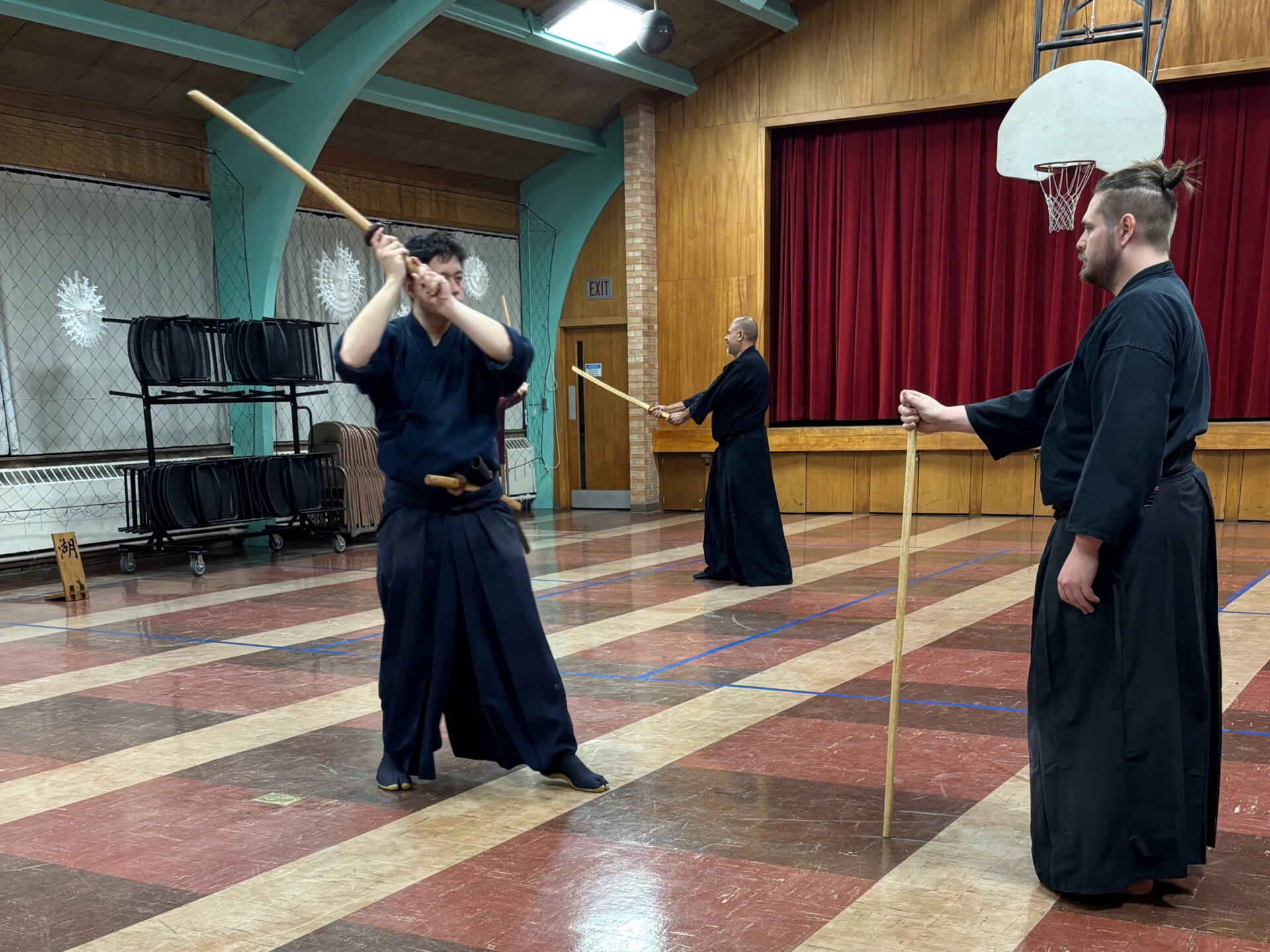
It takes a certain kind of person to bring a stick to a sword fight. For that person to win the fight without anyone dying is extraordinary. For a moment in time, this was possible. I’d like to be a part of maintaining this impossible-seeming task, to carry it past my generation.
My ancestors lived 125 miles from the castle where this art was taught. (Roughly the distance from here to Duluth.) It gives this experience a personal touch that makes me feel special.
My husband started training during college in New York, and I started soon after. Over time, I had to decide whether I was practicing because my friends were doing it, or if I was practicing for myself.
I choose to train for the physical challenge of learning progressively complex movements, but also to understand the psychological and historical aspects of these movements.
Our larger Jo community has been welcoming and encouraging, seeing me as a unique part of a larger tradition that seeks to understand and preserve a historical martial art.
In Jo, we learn that power, not strength, is what makes these movements most successful.
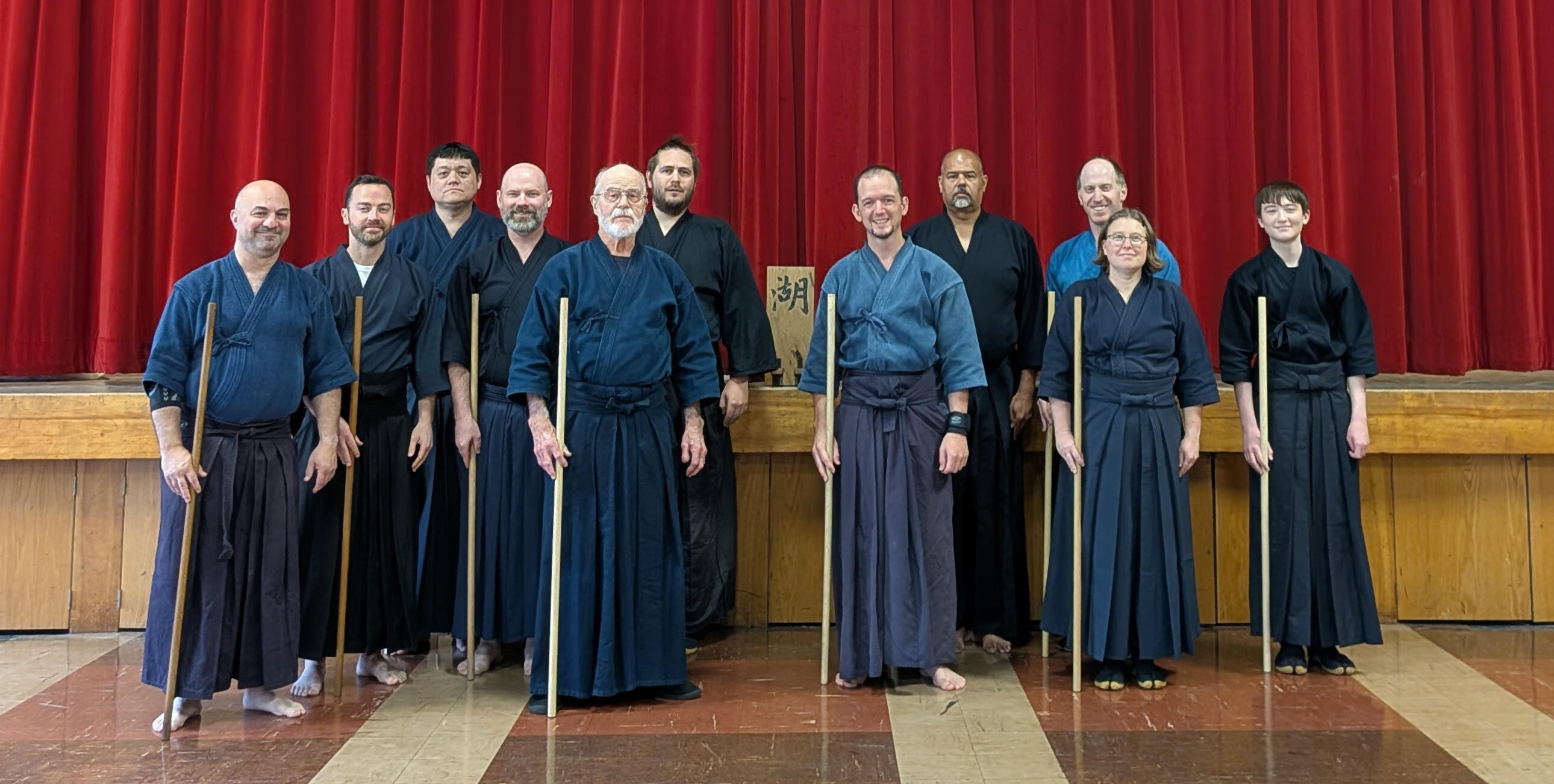
I started Shintō Musō-ryū to supplement my Japanese swordsmanship training but it’s challenged me in ways I didn’t expect.
You’re holding a stick. Your opponent has a sword. It feels like a disadvantage, but that’s the point. Shintō Musō-ryū teaches you to stay calm and resolve conflict without escalating it. And that’s not just a martial arts lesson. That’s a life lesson.
When I first saw jodo it made me think, is it really possible that someone with a wood stick can defeat someone with a metal sword? As someone who has studied the sword, I want to know how that is possible and how much training it takes to feel confident in that ability. I was also intrigued by the older koryu system and how it differs from modern Japanese martial arts.
It involves the use of a non-lethal weapon to subdue a lethal weapon. It’s part of my profession, to potentially use any weapon to subdue an attacker.
It also reminds me of the broom pole I had as a kid that I used to play baseball with ;)
I have experience with Chinese martial arts, and this seems very different. The Japanese aspect of martial arts, I believe, focuses on a singular movement – it’s like a freeze frame of a movement that you have to understand.